
Beware the Liberal Propaganda Trying to Influence You

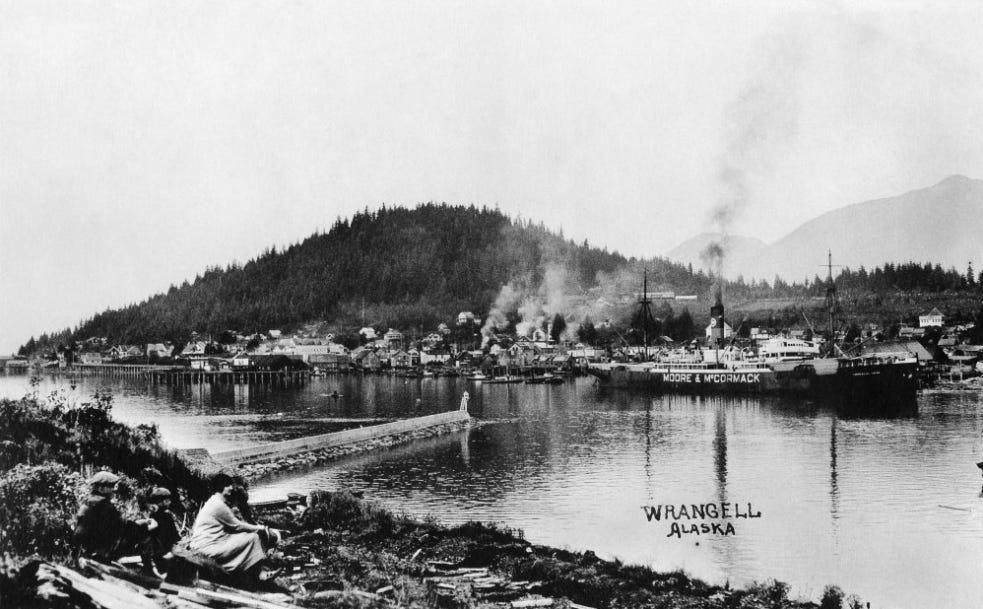
I read a recent article in the Anchorage Daily News (Yes, I read it, so you don’t have to). It was titled, “The 1915 Expulsion of Mexicans from Wrangell”, and although it was presented as a historical perspective of events from Alaska's past, it was actually a biased attempt to influence Alaskans on the issue of illegal immigration and against enforcing immigration laws.
I say this because there are many little-known events from Alaska’s rich history that the author could have written about. One example that would be timely today is the wisdom demonstrated by former Governor Jay Hammond, who was a proponent of saving some of the oil wealth from Prudhoe Bay and creating the Alaska Permanent Fund.
Hammond knew a time would come when politicians would attempt to get their hands on the last bit of Alaska’s oil wealth that had not already been spent. That very idea was suggested in the last session of our state legislature. The ADN could have done a feature article on Jay Hammond and his efforts to protect the PFD. It would have been timely and enlightening. However, the ADN doesn’t run stories like this because it would show liberal politicians in a bad light for trying to steal the Permanent Fund, and that doesn’t fit with the paper’s left-wing editorial view.
Instead, the Anchorage Daily News chose to focus on an incident of alleged racism from Alaska’s past.
The article in question recounts an event that took place in Wrangell back in 1915. It details a story about seasonal cannery workers who attacked and stabbed a local resident, badly injuring him. The victim was a respected member of the local community who happened to be white. The attackers were a small group of seasonal cannery workers who happened to be Mexican. At the time, Wrangell had no local law enforcement officers, and the attackers were not apprehended for their crime.
In response to the lack of accountability for the perpetrators, the mayor formed a committee of residents to determine how to resolve the issue. The author disparagingly refers to this as a vigilance committee, even though the community's elected officials organized it. Typically, vigilance committees were organized outside of the law, but that wasn’t the case for this incident. The committee issued a harsh order that all Mexicans in town had to leave town within 24 hours, or they would be hanged.
The author spent considerable time examining this order from a racial perspective. The residents of the city are tarred by comparison to the lynchings of African Americans, and incidents of anti-Mexican bias that happened in other parts of the country. The implication is that citizens in Wrangell were motivated by racism back in 1915, and by implication, we might also be racist if today we support efforts to enforce our country’s immigration laws.
Some important facts that the author skips over contradict his suggestion of racism as a motivation. The first is that no Mexican was ever lynched in Wrangell. Perhaps in the absence of law enforcement, this was simply a harsh threat made to force the perpetrators to leave town. There were also Chinese and Filipino seasonal cannery workers in town who were not a target of the town's “leave or else” order. The author also overlooks the fact that the 1910 census reveals Wrangell had a diverse demographic makeup. Out of a local population of 743 people, almost half were ethnic minorities; approximately one-third were Native Americans, and 10% were Asian/Pacific islanders. None of those other racial groups were subject to the order to leave town. The author also overlooks the fact that the following year, another group of Mexican cannery workers was allowed to come back to Wrangell and work in local canneries without incident. Perhaps the committee's order was more about ensuring public safety than about racism against Mexicans.
The author only briefly mentions that a federal marshal eventually tracked down and apprehended the perpetrators of the crime. One of them, a man by the name of Joe Costa, was convicted of the stabbing and sent to the federal penitentiary at McNeil Island in Washington State.
I don’t know what was in the hearts of those people in Wrangell back in 1915. I have no way of proving that it wasn’t racism that drove the citizens of Wrangell to take this action, but they could have had a different motivation. They didn’t have local law enforcement to keep their town safe, and perhaps they did what they thought was best to ensure the safety of those living in the community, including those who were Alaska native or Asian. I do know that it is challenging to read stories about historical events accurately because we often do so through the lens of current events and our personal experience.
Perhaps the lesson we should all take from this is to exercise caution when reading articles from any left-wing media source. They may be attempting to use propaganda to influence us to achieve their own objectives.
Citations:
https://www.adn.com/alaska-life/2025/07/20/the-1915-expulsion-of-mexicans-from-wrangell/
https://www.wrangellhistoryunlocked.com/blog/pop